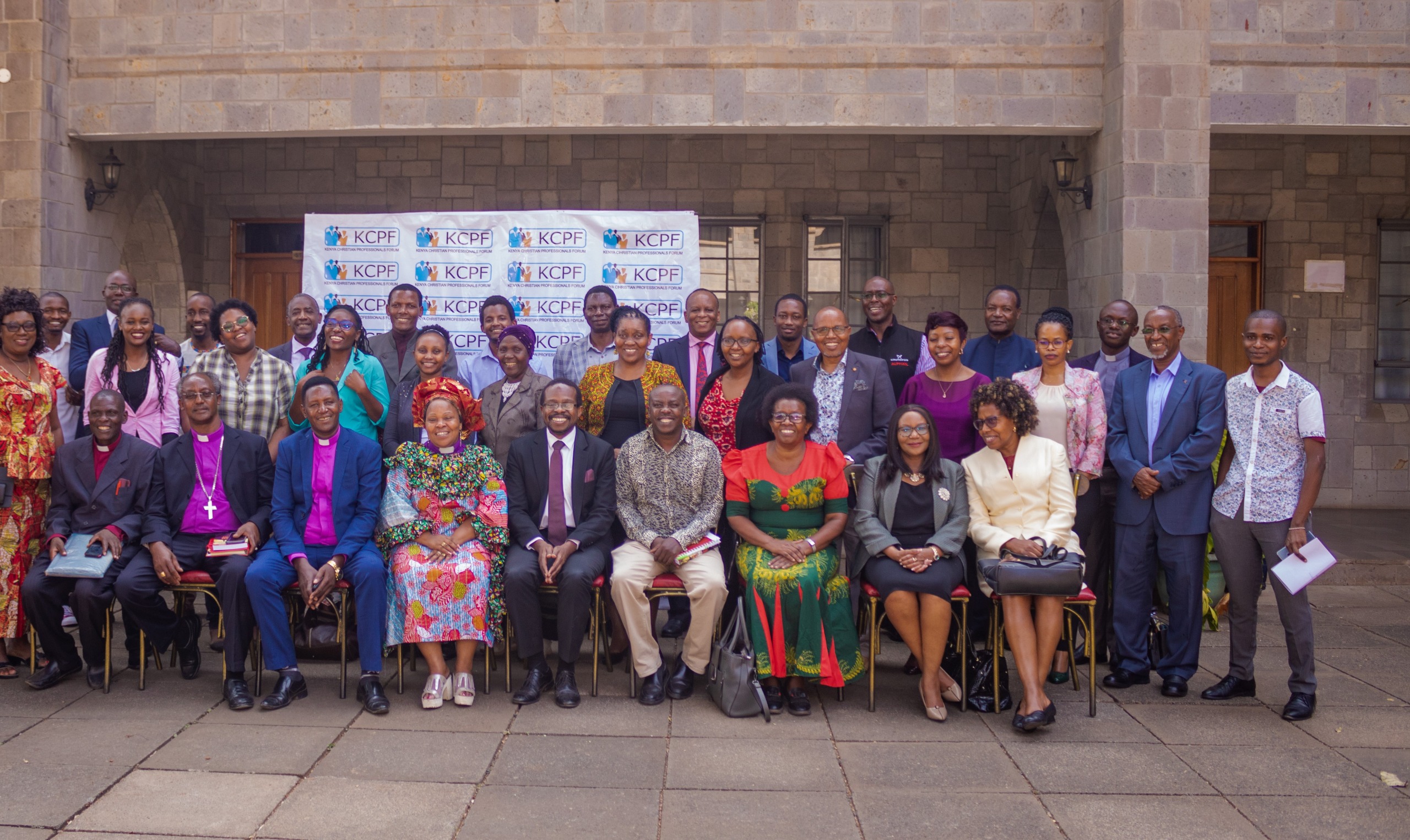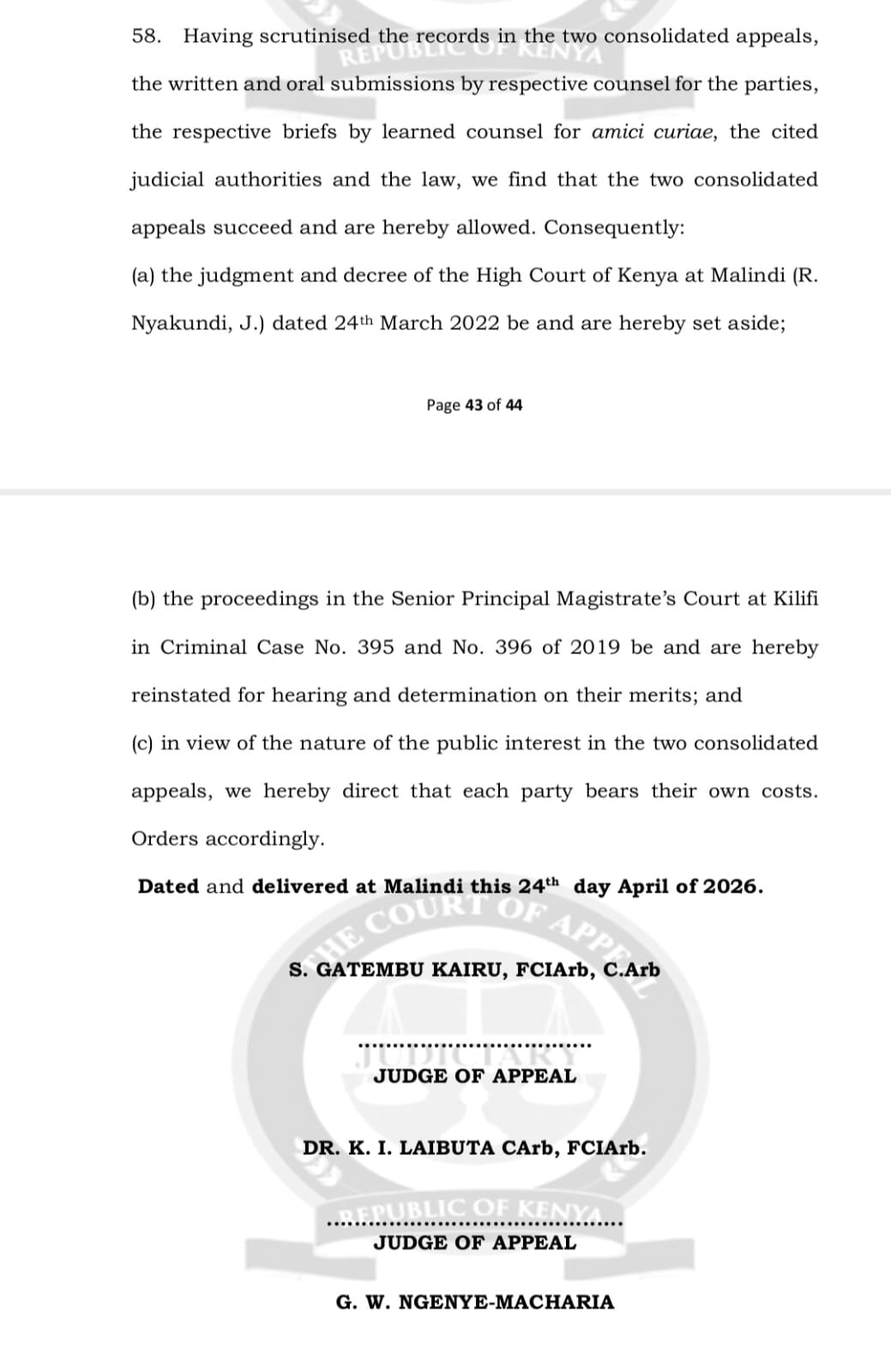
The Court of Appeal has delivered a landmark judgment in Malindi Civil Appeal No. E029 of 2022 (Consolidated with Civil Appeal No. E030 of 2022), Kenya Christian Professionals Forum & Others v PAK & Others, overturning the Malindi High Court decision of 24 March 2022 which had declared abortion a fundamental right. The appellate judges consolidated the appeal filed by the Kenya Christian Professionals Forum (KCPF) with related appeals by the Director of Public Prosecutions and the Honourable Attorney General.
KCPF welcomes this ruling, which provides much‑needed clarity that no constitutional right to abortion exists under Article 26, and that the Penal Code provisions criminalizing abortion and related acts remain fully in force.
Legal Background
The High Court had previously allowed the petition of PAK, a minor, holding that abortion was a fundamental right and that her arrest, examination, and prosecution violated Articles 25, 26, 29, and 31 of the Constitution. It also halted the prosecution of both PAK and the health care professional who attended to her.
The Court of Appeal reframed the matter into six central questions concerning the lawfulness of procuring an abortion and the propriety of halting criminal proceedings. In its judgment, the Court held:
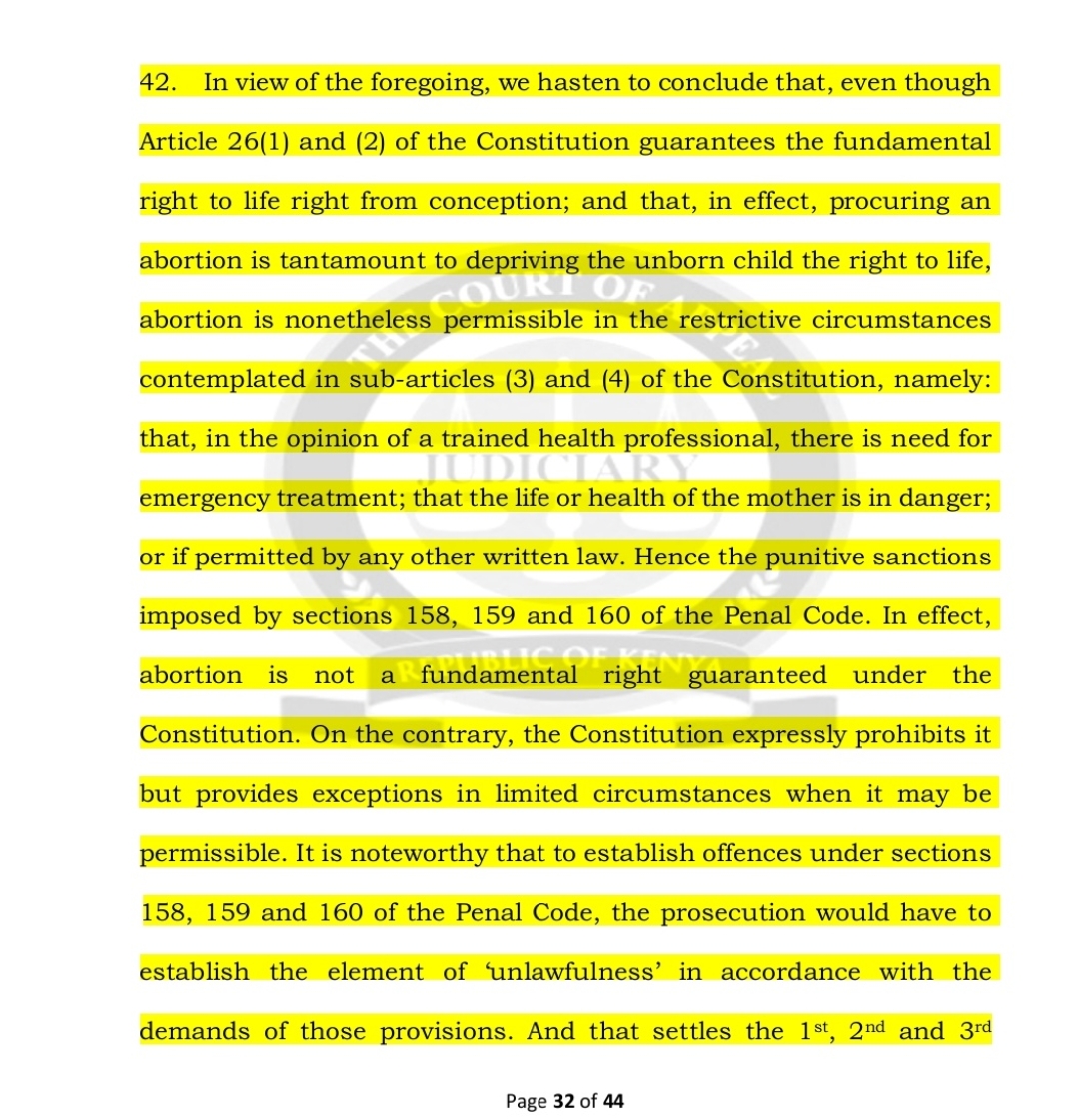
“…In effect, abortion is not a fundamental right guaranteed under the Constitution.”
The Court agreed with the submissions made on behalf of KCPF by its legal team led by Mr. Charles Kanjama, SC, affirming that:
- Article 26 protects the right to life, including that of the unborn.
- Article 26(4) permits termination of pregnancy only in specific, medically justified circumstances.
- Sections 158, 159, and 160 of the Penal Code remain a lawful basis for prosecuting abortion-related offenses.
Accordingly, the ruling clears the way for the continuation of criminal proceedings against PAK and the health care professional involved.
Constitutional Interpretation
The Constitution of Kenya, 2010 is drafted in clear, accessible language. The term “abortion” in Article 26(4) must therefore be understood in its ordinary meaning—the premature termination of a pregnancy.
Read plainly, Article 26(4) establishes that termination of pregnancy is not permitted unless, in the opinion of a trained health professional, specific conditions are met. This threshold is grounded in professional medical judgment, exercised with competence, accountability, and respect for the law.
This judgment is guided by the ethical principles of beneficence, non‑maleficence, respect for autonomy, and justice, and must take into account the two lives involved—the mother and the unborn child—both deserving of care and protection.
Call to Medical and Health Professionals
Medical and health professionals, particularly those of Christian conviction, are encouraged to apply these constitutional provisions with conscientious commitment, ensuring that clinical decisions remain faithful to:
The law,
The highest ethical standards, and
The moral duty to safeguard both lives.
KCPF’s Mission and Call to Partners
This decision is a welcome validation and a significant encouragement to KCPF’s ongoing efforts to promote the protection and preservation of life, which we affirm as a gift from God. Safeguarding life remains our foremost strategic pillar.
We urge our partners to continue standing with us as we consolidate and advance the gains made through their faithful and consistent support. We also welcome new partners who share in our vision and mission to join us in this important work.
KCPF remains committed to upholding biblical values in all spheres of professional life.
We look ahead with renewed resolve as we prepare for forthcoming events, details of which are available on our website and social media platforms.
“The harvest is plentiful, but the workers are few.” — Matthew 9:37